
Germination is a beautiful and fundamental process in the life cycle of a plant. It’s the moment a dormant seed, holding the potential for new life, begins to awaken and grow into a young seedling. This transformation is not magic; it’s a precise biological process triggered by the right environmental conditions. Understanding how to create these conditions is the key to successful germination and a thriving garden.
A seed is, in essence, a tiny plant embryo in a state of suspended animation. It’s designed to wait for the perfect moment to sprout. This waiting period can last for days, months, or even years, depending on the plant species. The primary triggers for this awakening are moisture and warmth. Without these two elements, a seed can remain dry and lifeless forever. When placed in a moist growing medium, the seed begins to absorb water, rehydrating its internal structures and kicking off the metabolic processes that have been on hold.
Why You Should Master the Art of Germination
Learning to germinate your own seeds is one of the most valuable skills you can acquire as a gardener. While buying live seedlings might seem convenient, germinating your own offers significant advantages that can save you time, money, and frustration.
- Cost-Effectiveness: Purchasing live seedlings can be quite expensive, especially if you’re growing on a large scale or planting multiple seasons a year. A single packet of seeds, which costs a fraction of a live plant, can produce dozens of healthy seedlings. Over time, these savings add up dramatically, allowing you to invest more in other gardening essentials.
- Quality Control: Live seedlings purchased online or from a store often arrive damaged or stressed from transport. This can lead to stunted growth or even death, wasting both your money and the precious time you’ve invested. When you germinate your own seeds, you have complete control over the process, ensuring your seedlings get the best possible start in life.
- Expanded Variety: Germinating from seed gives you access to a much wider variety of plant species and cultivars. Local garden centres may have a limited selection, but seed catalogues offer an incredible array of unique vegetables, herbs, and flowers that you might not find otherwise. This flexibility allows you to customise your garden exactly to your liking.
A Step-by-Step Guide to Successful Germination
While seeds can germinate in many different mediums, from soil to wet paper towels, rockwool is an excellent choice for hydroponic systems due to its unique properties. Here’s how to use it for flawless germination.
Preparing Your Rockwool Cubes
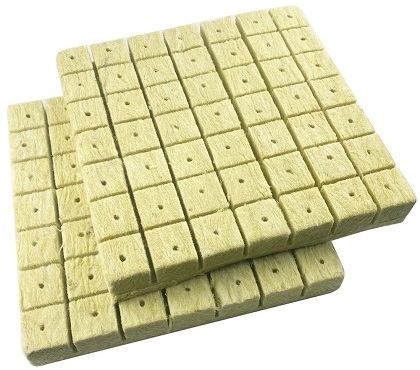
Rockwool is a sterile, porous medium made from molten rock spun into fibers. This material is fantastic for starting seeds because it retains water without becoming waterlogged and provides an ideal structure for root development.
- Soak the Rockwool: Place your rockwool sheet in a tray and soak it with de-chlorinated water. The pH of the water should be between 5.5 and 6.5. Let it soak for about 10 minutes until it’s fully saturated.
- Drain Excess Water: Remove the rockwool from the water and let it drain in a sink for about 10 minutes. The cubes should be moist but not dripping wet.
Planting Your Seeds
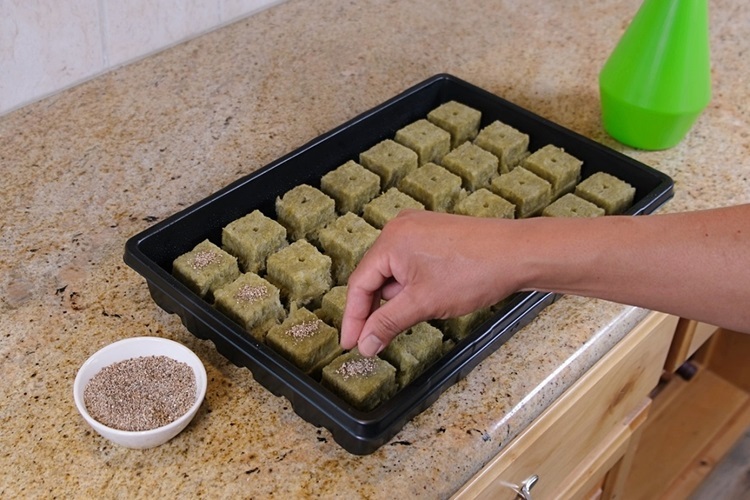
- Plant the Seeds: Carefully drop one or two seeds into the planting hole of each rockwool cube. For smaller seeds, a moistened toothpick can help you handle them. Position the seeds about 1/4 inch down from the top.
- Moisten the Top: Use a spray bottle to mist the top of the planting hole, ensuring the seeds are properly moistened.
- Add Vermiculite: Sprinkle a small amount of vermiculite on top of the cubes and into the planting holes. Vermiculite helps retain moisture and prevents the seeds from drying out. Avoid pressing it down, as this can make it difficult for the seedling to sprout. Give the cubes one more light misting.
Nurturing Your Seeds and Seedlings
The key to successful germination is maintaining the right balance of moisture, temperature, and light.
- Maintain Moisture and Temperature: Keep about 1/4 inch of water at the bottom of the tray to allow the rockwool to wick up moisture. Mist the cubes daily to keep the tops from drying out. Most seeds germinate best at temperatures between 65 and 80 degrees Fahrenheit (18-27 degrees Celsius). A humidity dome can help maintain warmth and moisture, and a heating mat can be used in cooler months.
- Introduce Light Immediately: The moment you see the first hint of green peeking out of a cube, it’s time to provide light. Seedlings need light to begin photosynthesis, the process of creating their own food. Place the sprouted cubes under a grow light, about 2 to 3 inches away from the tops of the seedlings. A lighting schedule of 14-16 hours per day is ideal. At this stage, remove any humidity domes or heating mats, as they are no longer needed.
- Prevent Leggy Seedlings: If a seedling’s stem becomes too long and thin, it’s called being “leggy.” This is almost always caused by a lack of light. The plant is stretching to find a light source. To prevent this, ensure your light is close enough and on for the required duration. While leggy plants can sometimes be saved in soil by burying them deeper, this isn’t possible in hydroponic tower systems, so prevention is key.
Conclusion
Mastering the art of seed germination is a rewarding experience that empowers you to grow your own food with confidence. By understanding the essential needs of a seed—moisture, warmth, and light—you can ensure a high success rate and cultivate strong, healthy plants from the very beginning. This foundational skill not only saves money but also provides a deep sense of satisfaction as you watch life unfold from a tiny seed.
For all the tools you need to achieve successful germination, from rockwool cubes to grow lights, look no further than ALTO Garden.
