
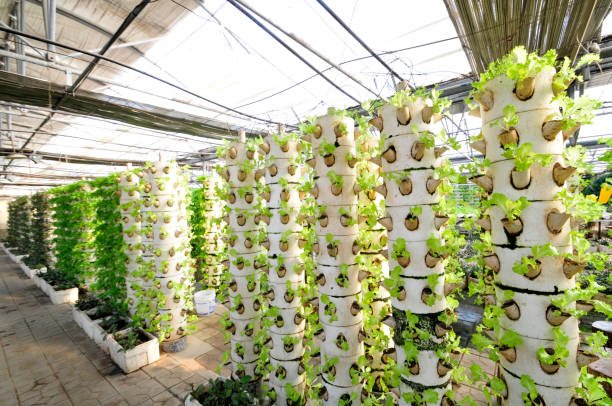
A hydroponic garden reimagines traditional soil-based cultivation by eliminating soil entirely and substituting it with a nutrient-rich water solution. In this soilless system, plant roots receive all essential nutrients directly through carefully balanced water that circulates in a closed loop. Unlike conventional gardening, a hydroponic garden bypasses many challenges associated with soil—such as pests, weeds, and uneven nutrient distribution—while delivering faster growth rates and higher yields. By leveraging water as the primary growth medium, this approach conserves water (up to 95% less than conventional methods) and dramatically reduces environmental waste.
Within the hydroponic realm, the hydroponic tower garden emerges as a vertical adaptation that maximizes space efficiency. Picture a tall cylinder—often no wider than a few feet—housing multiple tiers of net pots. Each net pot snugly holds a plant, suspending its roots in midair and exposing them to air and circulating nutrient solution. This design not only conserves precious floor space but also allows gardeners to cultivate dozens of plants within a mere three square feet. Whether you’re growing organic lettuce, vibrant herbs, or even compact fruiting varieties, a hydroponic tower empowers urban dwellers, apartment residents, and suburban families alike to harvest fresh, pesticide-free produce year-round.
Core Advantages of a Hydroponic Tower Garden
- Space Optimization: Vertical layering transforms small footprints into lush, multi-level gardens.
- Water Efficiency: Closed-loop reservoirs recycle nutrient solution continuously, minimizing water waste.
- Accelerated Growth: Direct root access to oxygen and nutrients fosters faster development compared to soil beds.
- Pest Mitigation: Elevation and soilless design lower the risk of common ground-based pests and diseases.
By combining these benefits, a hydroponic garden transcends traditional limitations and introduces a streamlined, sustainable alternative for cultivating fresh food.
Mechanics of a Hydroponic Tower: From Roots to Reservoir
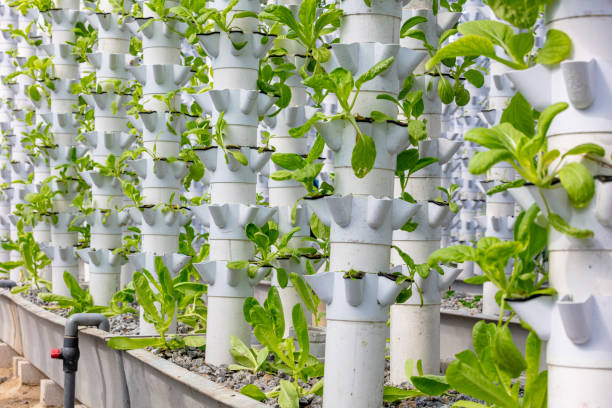
A hydroponic tower typically consists of a cylindrical structure that houses plant net pots stacked vertically. At the tower’s base resides a reservoir containing water blended with nutrient formulations. A submersible water pump elevates this nutrient solution to the top of the tower, where it gently drips down around each plant’s roots. As gravity guides the nutrient solution back to the reservoir, plant roots absorb both nutrients and oxygen, fostering robust development.
Key Components
- Net Pots: Small, perforated containers that cradle seedlings or transplants. Their mesh-like design allows roots to expand freely into the tower’s interior.
- Reservoir Tank: A watertight container at the tower’s base that stores nutrient solution and houses the water pump.
- Water Pump with Timer: Automates the irrigation cycle, delivering timed pulses of nutrient solution to the top of the tower. Typical settings range between 15 minutes on/45 minutes off (for rockwool or clay aggregate mediums) to 15 minutes on/15 minutes off (when using sponge cubes that retain less moisture).
- Vertical Cylinder: Often crafted from food-safe plastics (e.g., HDPE, PP, or LDPE), the tower supports net pots and channels nutrient flow.
As water cascades from the top to the reservoir, excess solution collects, preventing runoff and conserving precious resources. The timed intervals ensure roots receive ample oxygen during off-cycles, effectively transitioning this system into the aeroponic subset of hydroponics—since roots are intermittently misted rather than constantly submerged.
Watering Strategies and Efficiency in a Hydroponic Tower
Precision irrigation sets a hydroponic tower garden apart. Unlike soil-based gardens where overwatering can leach nutrients and create stagnant zones, an aeroponic-inspired tower wets roots at strategic intervals. This interval-based watering enables roots to alternate between nutrient uptake and oxygen absorption. When roots are moist, they absorb nutrients; when exposed to air, they intake oxygen more efficiently. The result is rapid vegetative growth and minimized risk of root rot.
Customizing Watering Schedules
- Seedling Stage: Young plants often thrive when the pump cycles run 15 minutes on and 15 minutes off over a 24-hour period. This frequency compensates for their limited root networks, which dry out more quickly.
- Vegetative Stage: Once plants develop stronger root structures, the timer can be adjusted to 15 minutes on and 45 minutes off, over 14–18 hours of light each day. In cooler months, reduce the total cycle to 12 hours, while warmer seasons may benefit from 16–18-hour cycles.
- Mature Plants: Larger root masses can store water longer, allowing for extended off-periods. Monitoring plant turgor and leaf color helps determine if additional watering frequency is needed.
By tuning the timer and observing plant health, growers can maintain consistent moisture levels without waste, leading to a sustainable, low-maintenance hydroponic garden.
Lighting Requirements for Optimal Growth
Plants in a hydroponic tower rely on two essentials: water (with nutrients) and light. When placed outdoors under full-spectrum sunlight, the tower requires no supplemental lighting. However, indoor environments or shaded areas necessitate LED grow lights. Modern LED technology offers a broad spectrum that mimics natural sunlight, providing the wavelengths crucial for each growth stage—blue for vegetative growth and red for flowering or fruiting.
Selecting and Positioning LED Grow Lights
- Full-Spectrum White LEDs: Emit a balanced range of wavelengths, suitable for all growth phases.
- Adjustable Light Bars: Many towers include 360-degree rotatable bars that allow growers to fine-tune light distance and angle. Seedlings benefit from closer proximity (roughly 6–8 inches), while mature plants may require lights to be raised to avoid burning foliage.
- Timer-Controlled Lighting: Automate 12–16 hours of light followed by 8–12 hours of darkness. Consistency is key—plants respond best to predictable on/off cycles, which regulate photosynthesis and metabolic functions.
Proper light coverage ensures each tier of the tower receives adequate illumination. Reflective walls or white surfaces nearby can also enhance light dispersion, reducing shadows and promoting uniform growth.
Choosing Food-Safe Components for Longevity
When constructing or purchasing a hydroponic tower garden, material selection is paramount. Only certain plastics have been deemed food-safe by regulatory bodies (e.g., FDA-approved):
- #1 Polyethylene Terephthalate (PETE)
- #2 High-Density Polyethylene (HDPE)
- #4 Low-Density Polyethylene (LDPE)
- #5 Polypropylene (PP)
These plastics are BPA-free, preventing harmful chemicals from leaching into the nutrient solution and ultimately into the edible produce. Avoid PVC (#3), polystyrene (#6), and polycarbonate (#7) unless explicitly labeled food-safe. Always verify the manufacturer’s specifications to ensure tower longevity and consumer safety.
Benefits of Vertical Farming in Urban Environments
As urban populations swell, space becomes a premium commodity. A hydroponic tower transforms a three-square-foot area into a high-yield garden capable of sustaining 24 or more heads of lettuce (or equivalent), equivalently replacing eight traditional square feet of horizontal farmland. This vertical footprint not only conserves real estate but also brings farming closer to consumers—reducing transportation emissions and strengthening food security within cities.
Urban Applications
- Balcony or Patio Gardens: Apartment dwellers can place towers on balconies to cultivate fresh herbs and salad greens.
- Indoor Kitchens: For homes lacking adequate outdoor space, towers equipped with LED lights can thrive next to windows or in dedicated grow corners.
- Community Spaces: Urban community centers, schools, and nonprofits can install multiple towers to demonstrate sustainable agriculture and educate residents on food production.
By integrating a hydroponic garden into urban settings, communities gain year-round access to fresh produce, foster local engagement, and reduce reliance on imported goods.
The Future of Sustainable Agriculture: Hydroponic Towers at a Glance
While hydroponic garden systems have existed for decades, widespread adoption has accelerated recently due to technological advancements and growing environmental concerns. The water-conserving nature of the hydroponic tower garden makes it particularly appealing in arid regions and drought-prone areas. Countries in the Middle East, parts of Africa, and southwestern United States have already implemented large-scale vertical farms to counteract water scarcity and desertification.
Despite these successes, large-scale industrial hydroponic farms face challenges:
- Initial Capital Investment: Procuring hundreds or thousands of towers, plus water management infrastructure, entails significant upfront costs.
- Specialized Knowledge and Maintenance: Farmers accustomed to soil-based agriculture must acquire new skills—monitoring pH and EC (electrical conductivity) levels, programming pump timers, and troubleshooting mechanical equipment.
- Energy Consumption: While LED efficiency has improved, consistent operation of pumps and lights still demands electricity. Integrating renewable energy sources (solar or wind) can mitigate this issue but adds complexity to system design.
Nevertheless, micro-farms and home-based hydroponic tower gardens continue to flourish. As more urban growers demonstrate success with minimal space and water usage, local demand for do-it-yourself systems is rising. Over time, innovations in modular tower designs, automated monitoring systems, and low-energy lighting will likely reduce costs and simplify broader adoption.
Conclusion: Embracing Tomorrow’s Gardening Today with ALTO Garden
A hydroponic tower garden represents a revolutionary leap in home cultivation—merging efficient water usage, vertical space optimization, and accelerated plant growth into one cohesive system. By understanding the mechanics of a hydroponic tower, fine-tuning watering and lighting schedules, and ensuring food-safe materials, growers can harness the full potential of soilless farming. As cities evolve and arable land shrinks, integrating vertical hydroponic garden solutions paves the way toward resilient, localized food systems. Cultivate your own sustainable oasis and join the forefront of urban agriculture with ALTO Garden.
